
The complete Exfoliation Breakdown
Last Updated on July 7, 2026 by Jay
The Exfoliating Acids Guide: AHA, BHA, LHA, and PHA
Chemical exfoliation can completely transform your skin, but it is easily one of the most misunderstood steps in a beauty routine. While regular exfoliation improves skin texture and clarity, overdoing it can severely damage your skin barrier. Finding the perfect balance is key.
Every acid family behaves differently on your skin. Choosing the right one depends entirely on your specific skin type and goals. This comprehensive guide breaks down the four major exfoliating acid families: AHA, BHA, LHA, and PHA. You will learn exactly how they work, who they suit, and how to use them safely.
How Exfoliating Acids Work
Exfoliation removes dead skin cells from the skin surface or from deep inside the pores. Doing this regularly helps your skin look smoother, brighter, and more refreshed. Depending on the specific formula you choose, chemical exfoliants can reduce acne breakouts, fade pigmentation, and boost overall hydration.
Some gentle options even help strengthen your skin barrier over time. Regular use also allows your other skincare products, like serums and moisturisers, to absorb much better. The golden rule is to choose the correct acid for your concerns, focusing on consistency rather than aggressive strength.
His vs. Hers: Why Our Exfoliation Needs Differ
His Perspective: Thick Skin & Shaving Drama
- The Biology: Men’s skin is roughly 25% thicker than women’s and contains more active sebaceous glands, meaning it naturally produces more oil.
- The Main Goals: Preventing trapped beard hairs, clearing deep pore congestion, and softening rough skin texture.
- The Best Matches: BHAs (Salicylic Acid) are a man’s best friend because they travel deep into pores to target razor bumps and ingrown hairs. LHAs offer a great post-shave alternative to clear pores without the sting.
- The Golden Rule: Never apply strong surface acids (like Glycolic AHA) immediately after a close razor shave, or you will experience severe stinging and redness.
Hers Perspective: Barrier Care & Cycle Changes
- The Biology: Women’s skin is typically thinner, more prone to dehydration, and highly influenced by monthly hormonal fluctuations.
- The Main Goals: Fading acne scars, boosting a radiant glow for makeup application, and targeting fine lines.
- The Best Matches: AHAs (like Lactic or Glycolic Acid) are perfect for sweeping away dull surface skin to reveal a bright complexion. PHAs are ideal for maintaining a strong skin barrier during sensitive days or colder months.
- The Golden Rule: Avoid layering multiple active products (like mixing your exfoliating acids with Retinol or Vitamin C in the same routine), as this easily compromises thinner skin barriers
The Four Types of Exfoliating Acids
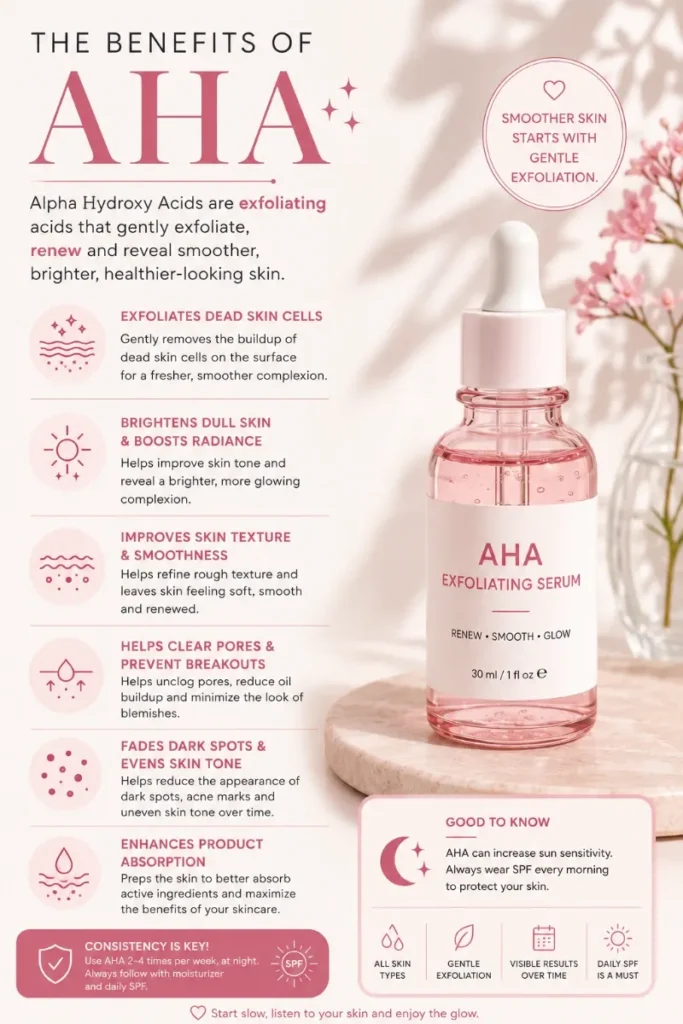
Best for: Dry, dull, textured, or sun‑damaged skin
How it works: AHAs are water-soluble and focus on the surface layer of your skin. They dissolve the cellular “glue” holding dead cells together, revealing a brighter complexion underneath.
His Match: Texture Smoother
Perfect for men who do not shave daily and notice rough, flaky skin texture building up underneath their stubble.
Hers Match: The Radiance & Anti-Ageing Hero
Ideal for women wanting to fade hyperpigmentation, smooth fine lines, and create a perfectly smooth canvas for seamless makeup application.
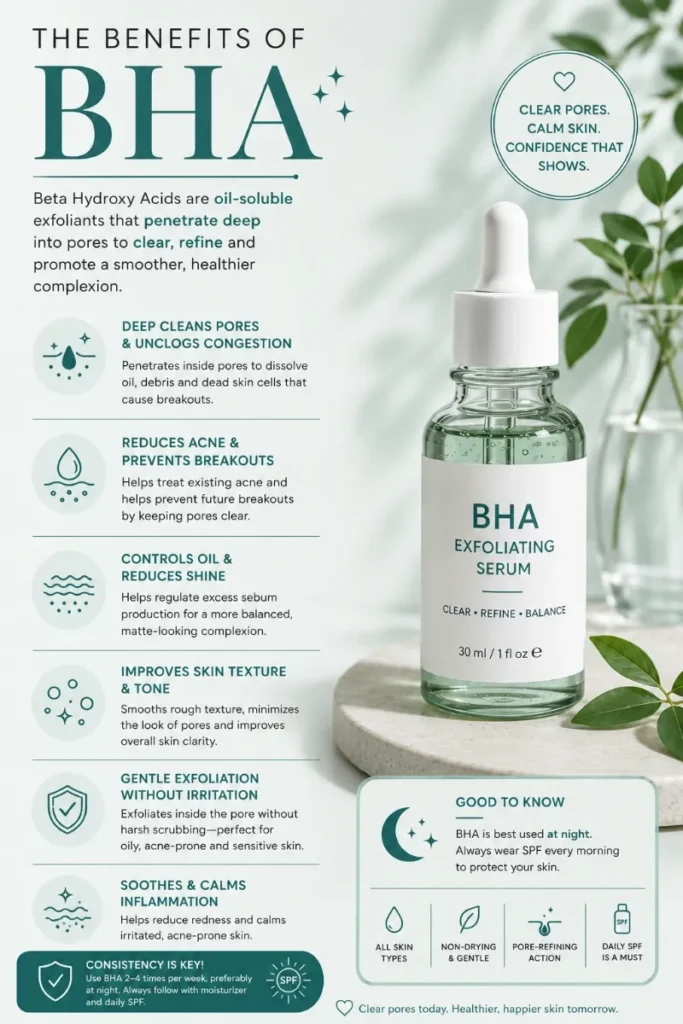
Best for: Oily, acne‑prone, congested skin and large pores
How it works: BHAs are oil-soluble, meaning they can cut through sebum. They travel straight into your pores to dissolve oil, acne debris, and dead skin cells. This unique trait makes them ideal for tackling blackheads, breakouts, and ingrown hairs.
His Match: The Ultimate Beard & Shave Companion
BHA is a must-have for men. Because it dissolves oil inside the pore, it is the ultimate tool for preventing ingrown hairs and razor bumps around the beard line.
Hers Match: The Hormonal Breakout Buster
BHA is perfect for clearing out the stubborn, painful chin and jawline acne that flares up during monthly hormonal shifts.
Best for: Sensitive or reactive skin that still needs pore‑level exfoliation
How it works: LHA is a slow-release derivative of salicylic acid. It penetrates the skin gradually, offering incredibly controlled exfoliation with almost zero irritation.
His Match: Post-Shave Pore Care
An excellent alternative for men who get breakouts but find standard salicylic acid too stingy or irritating on freshly shaved skin.
Hers Match: Daily Maintenance
Great for women with reactive skin who want daily, effortless pore maintenance without triggering redness.
Best for: Sensitive, rosacea‑prone, or barrier‑compromised skin
How it works: PHAs have massive molecules that cannot penetrate deeply. Because they stay strictly on the surface, they exfoliate with total gentleness. They also act as humectants to attract moisture, making them perfect for hydration-focused routines.
His Match: The Lazy Skincare Entry Point
Ideal for men who suffer from dry, red patches but hate the tight, stripped feeling that traditional face washes leave behind.
Hers Match: The Skin Cycle Rest Day
The perfect acid for women to use during the “recovery” phases of their skin-cycling routines, or when their skin barrier feels sensitised by weather changes.
| Acid Type | Best For | His Primary Use | Hers Primary Use | Strength |
|---|---|---|---|---|
| AHA | Dry, dull, textured skin | Smoothing tough texture | Fading pigmentation & fine lines | Strongest surface action |
| BHA | Oily, acne‑prone skin | Razor bumps & ingrown hairs | Hormonal breakouts | Strongest pore action |
| LHA | Sensitive + acne‑prone | acne-pronePost-shave pore clearing | Daily gentle congestion control | Gentle BHA alternative |
| PHA | Sensitive, reactive skin | Soothing dry patches | Skin barrier recovery | Gentlest overall |
How Often Should You Exfoliate?
Your application schedule needs to match your gender-specific skin traits and tolerance levels:
- AHA: 1–3 times per week. (Note for Him: Avoid applying on the same night as a close razor shave).
- BHA: 2–4 times per week. (Note for Him: Use as a targeted splash-on toner after shaving to disinfect pores).
- LHA: Daily or every other day.
- PHA: Daily, thanks to its ultra-gentle, hydrating nature.
Start slowly with any new product and increase usage as your skin adapts. Always pay close attention to signs of redness or tightness to avoid over-exfoliation. Slow, steady care will give you a smoother, healthier, and beautifully balanced skin barrier.