Retinol (Retinoids)
Last Updated on July 3, 2026 by Jay
Understanding the Skincare Benefits of Retinoids
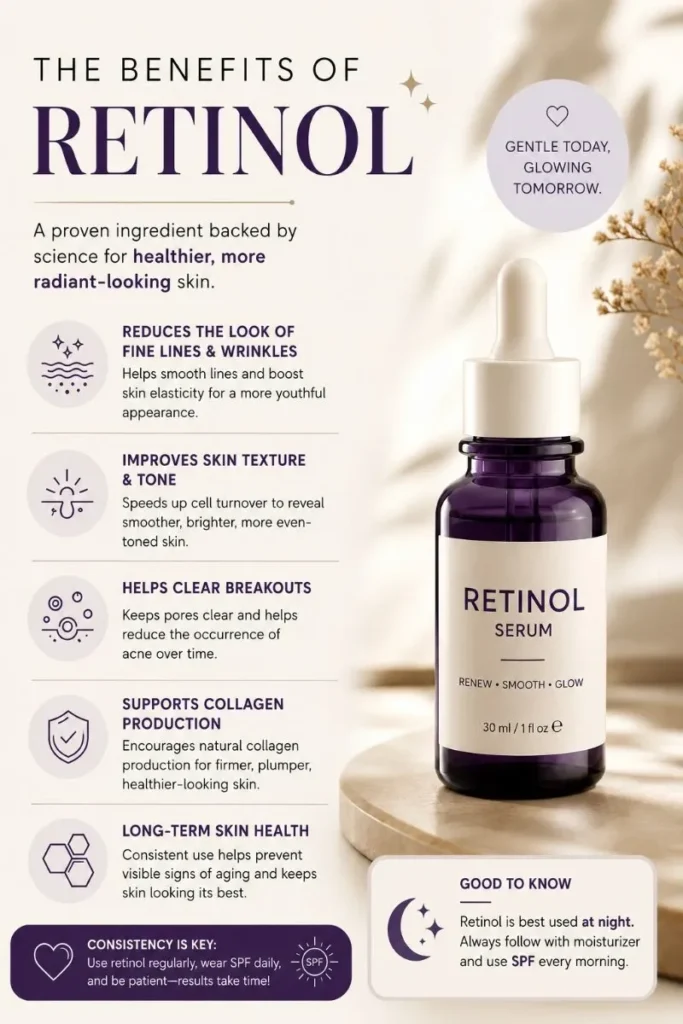
To unlock the powerful skincare benefits of retinoids, you need to understand how these vitamin A derivatives directly influence how skin cells behave. Because they encourage the skin to function more efficiently, retinoids are considered gold-standard actives for anyone looking to improve texture, clarity, and long-term skin health. Once applied, they act as a cornerstone ingredient for both anti-aging and acne-focused routines.
One of the key benefits of retinoids is their ability to speed up cell turnover. This means they help the skin shed old, dull, or damaged cells more quickly, revealing fresher, smoother, and more even‑toned skin underneath. This accelerated renewal process softens the look of fine lines, brightens the complexion, and improves overall texture.
Retinoids also support natural collagen production — the protein responsible for keeping skin firm, plump, and youthful. As collagen naturally declines with age, retinoids help counteract this loss by stimulating new collagen formation, making them one of the most effective ingredients for reducing visible signs of aging over time.
Beyond their anti‑aging benefits, retinoids are widely used for acne. They help keep pores clear by preventing dead skin cells from clogging them, while also reducing inflammation and regulating oil production. This makes retinoids a powerful option for treating breakouts, blackheads, and congestion, as well as minimising post‑acne marks.
Whether your goal is smoother texture, clearer pores, or long‑term skin rejuvenation, retinoids offer a scientifically backed, multi‑benefit approach that delivers real, visible results with consistent use.
Retinoids leave the skin more sensitive so wearing SPF is an essential.
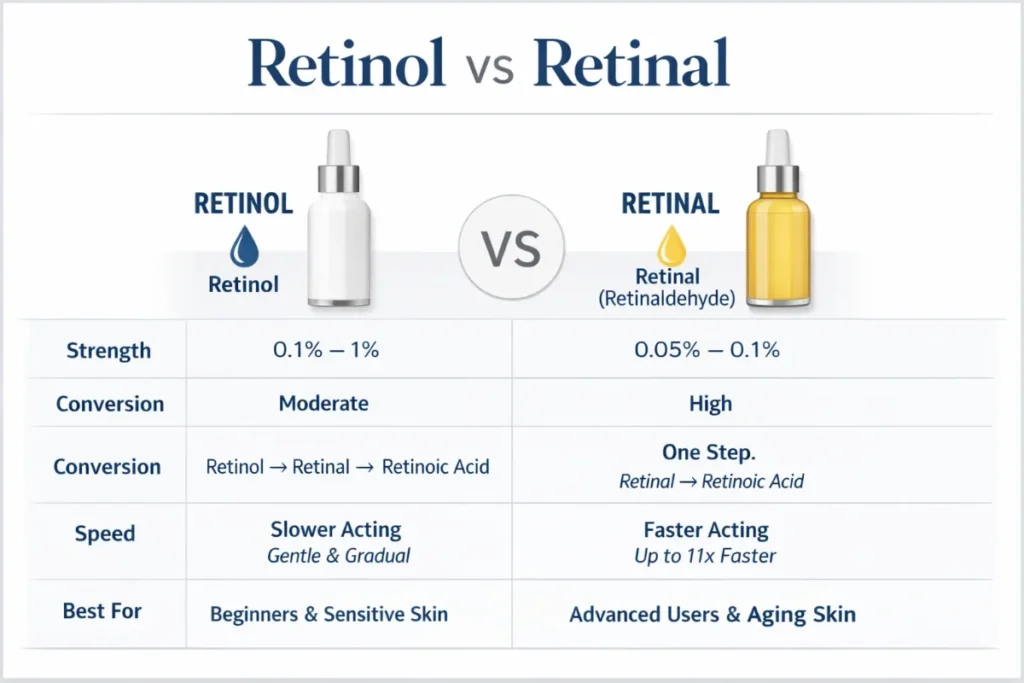
Exploring Different Types of Vitamin A Retinoids
- Retinol
- Retinal(dehyde)
- Retinyl Esters
- Stronger Prescription Only
| Retinoid Type | Conversion Steps to Retinoic Acid | Potency Level | Notes |
|---|---|---|---|
| Retinyl Esters | Retinyl ester → Retinol → Retinaldehyde → Retinoic acid | Very low | Gentlest option; ideal for beginners or sensitive skin |
| Retinol | Retinol → Retinaldehyde → Retinoic acid | Moderate | Most common OTC form; effective with consistent use |
| Retinaldehyde | Retinaldehyde → Retinoic acid | High | Faster results than retinol with similar tolerability |
| Retinoic Acid (Tretinoin) | None — already active | Very high | Prescription strength; strongest results, highest irritation |
| Adapalene | None — synthetic retinoid | High | Excellent for acne; stable and less irritating |
How to Start Using Retinoids Safely in Your Routine
Introducing retinoids into your routine can completely transform your skin — but it’s important to start slowly and build tolerance
Begin with a low‑strength retinol or retinal This allows your skin to adjust to the increased cell turnover and prevents irritation. Gradually increase frequency as your skin builds tolerance.
Look for Beginner or Starter products.
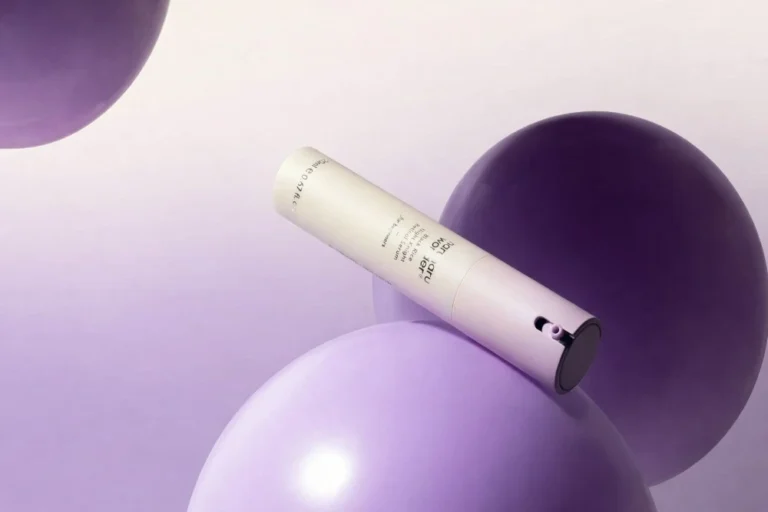
haruharu wonder – Night Knight Retinol Serum
Last Updated on July 7, 2026 by Jay Haruharu Retinol Review – Best Beginner Retinol for Sensitive Skin? Finding a gentle anti-aging treatment for sensitive skin can be a nightmare. If you are looking for a gentle starter product, this milky vitamin A serum is designed to smooth fine lines and give your face a…
What to Avoid to Maximize the Skincare Benefits of Retinoids
- Overuse — applying too often or too much can cause dryness and irritation.
- Mixing with harsh actives — skip exfoliating acids (AHA/BHA) or benzoyl peroxide on the same night.
- Skipping SPF — retinoids make skin more sun‑sensitive; daily sunscreen is essential.
- Ignoring hydration — always pair with a barrier‑supporting moisturizer.
- Using on broken or irritated skin — wait until skin is calm before reintroducing.
- Expecting instant results — visible improvements take 8–12 weeks of consistent use.