

Daily SPF Benefits: Why Sunscreen Is Essential for Your Skin
Exploring the Importance of daily SPF for Aging Skin
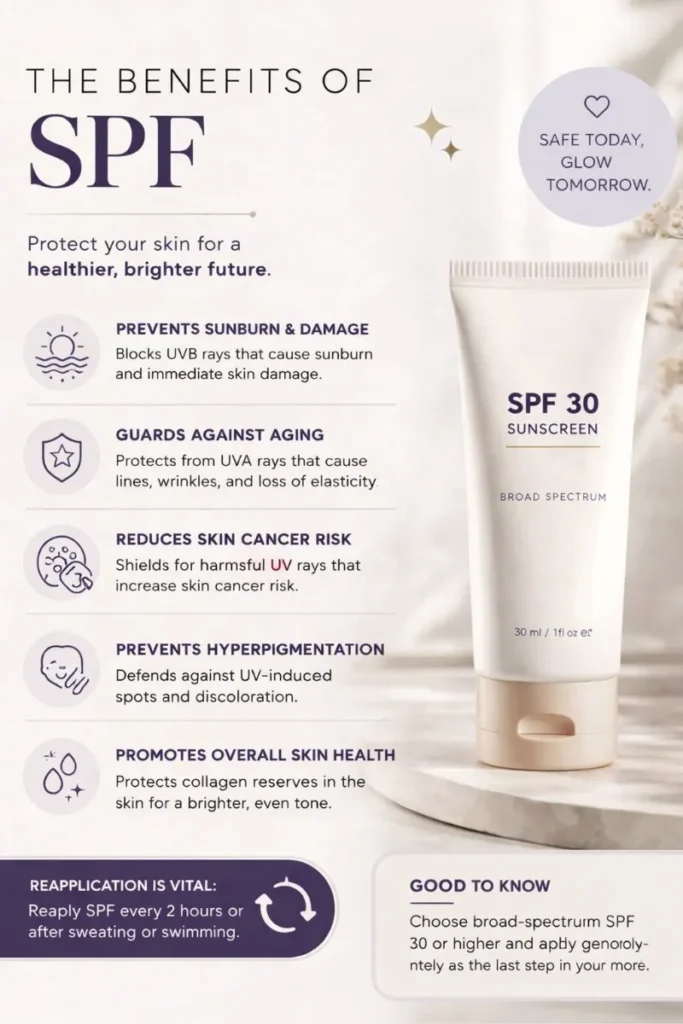
We all know we’re supposed to wear sunscreen every day. However, the importance of daily SPF becomes even clearer as we get older and start noticing fine lines, sagging and dark spots. Daily sun protection helps protect collagen, prevent premature skin ageing and reduce UV damage. Here’s what UV rays actually do to your skin and how to choose the right sunscreen for your routine.
It is recommended to use a broad‑spectrum sunscreen with a minimum SPF 30 every day, regardless of the weather. Broad‑spectrum protection shields the skin from both UVA (ageing) and UVB (burning) rays.
Daily sunscreen use is essential because it prevents photoageing — the UV‑induced damage responsible for wrinkles, fine lines, dark spots, and uneven pigmentation. Over time, UV exposure breaks down collagen and elastin, the proteins that keep skin firm, smooth, and elastic. This leads to visible sagging, texture changes, and accelerated ageing.
Chronic UV exposure also increases the risk of skin cancer, weakens the skin barrier, and contributes to long‑term inflammation and DNA damage. Consistent SPF use is one of the most effective ways to maintain healthy, youthful, and resilient skin.
The Importance of Daily SPF for Your Skin Barrier
The importance of daily SPF goes beyond preventing wrinkles. Consistent sun protection also helps maintain a healthy skin barrier and reduces the damage caused by UV exposure.. When UV rays hit unprotected skin, they generate free radicals that trigger inflammation and break down the lipids holding your skin barrier together. By keeping a protective shield over your face, you prevent this daily cellular degradation, allowing your skin barrier to properly repair itself and retain vital hydration.
The Best Way to Reapply Sunscreen Throughout the Day
Understanding the importance of daily SPF also means knowing when to reapply it. Applying sunscreen just once in the morning is not enough to maintain full protection throughout a day spent outdoors. UV filters break down under direct sunlight, and sweat or friction will rub the product off over time.
To ensure you remain fully protected, make it a habit to reapply your broad-spectrum sunscreen every two hours when outdoors. If you wear makeup, a lightweight SPF powder or mist can easily be layered on top without disrupting your look.
The amount of sunscreen you apply matters just as much as the SPF rating. For your face, ears and neck, a useful starting point is approximately two finger-lengths of sunscreen, although the exact amount depends on the product and area covered. Apply it evenly, paying particular attention to your hairline, ears and the sides of your nose. Using too little sunscreen means you may not receive the level of protection advertised on the bottle.
Mineral vs. Chemical Sunscreen: Which Is Better for Your Skin?
- Mineral Sunscreen
- Uses zinc oxide and/or titanium dioxide to protect against UV radiation.
- Primarily absorbs UV rays, while also reflecting some radiation.
- Often suitable for sensitive or reactive skin.
- Can have a thicker texture and sometimes leave a white cast.
- Available in lightweight and tinted formulas.
- Chemical Sunscreen
- Uses organic UV filters that absorb UV radiation.
- Often has a lighter texture that layers well under moisturiser or makeup.
- Can be more comfortable for everyday use, particularly around facial hair.
- Some formulas may irritate sensitive skin or sting around the eyes.
- Available in a wide range of finishes, including invisible and non-greasy options.
Which should you choose?
Whether you prefer mineral or chemical sunscreen, the importance of daily SPF remains the same: protecting your skin from UV damage, premature ageing and long-term sun exposure.. The most important thing is choosing a broad-spectrum SPF 30 or higher that feels comfortable enough to wear every day. Apply sunscreen before going outdoors and reapply regularly when exposed to sunlight.
The His & Hers Breakdown
His Take: If you have facial hair or shave frequently, chemical sunscreens are much easier to apply daily because they don’t get trapped in a beard or leave a ghostly white cast. However, if close shaving leaves your skin raw, chemical filters might sting your eyes when you sweat.
Her Take: Mineral formulas are brilliant if you have highly sensitive, mature skin because zinc oxide is naturally anti-inflammatory. The trick is finding a lightweight formula that doesn’t cause your makeup or evening moisturiser to roll off into little balls.
If you’re using retinol or other retinoids, check out our guide to the skincare benefits of retinoids and why daily sun protection matters.


2 Comments