

SPF – Sun Care
Last Updated on October 28, 2026 by
Exploring the Importance of Daily SPF for Aging Skin
We all know we are supposed to wear sunscreen every day. But if you are noticing new fine lines, sagging, or dark spots, understanding how your daily SPF actually protects your collagen is the difference between aging gracefully and waking up with damaged skin. Here is the science behind what UV rays are doing to your face—and how to choose the right formula for your shelf.”
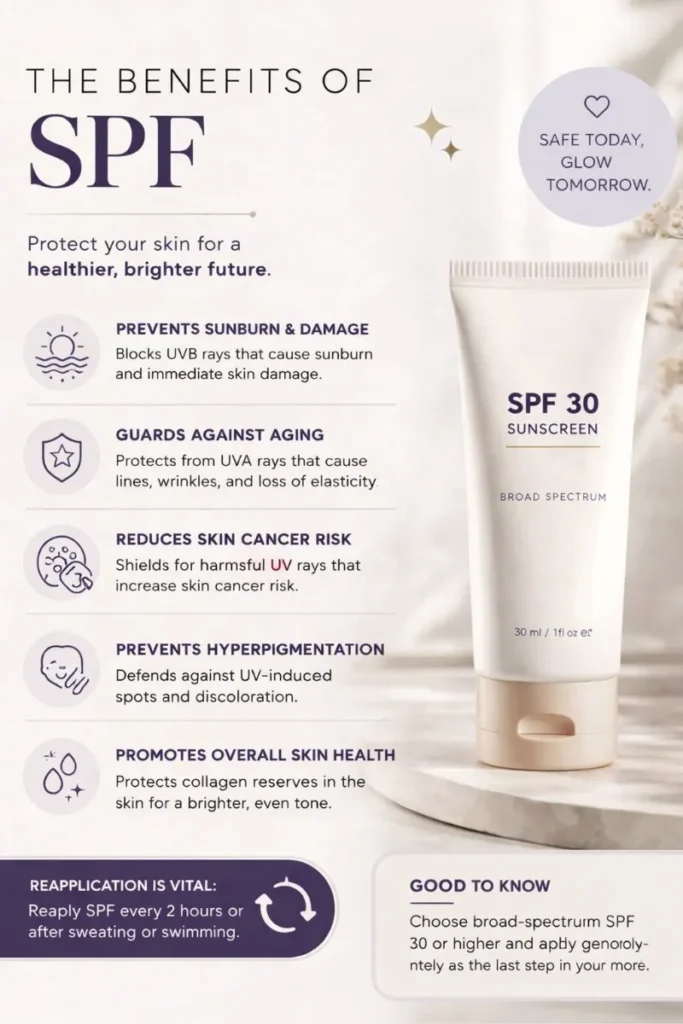
It is recommended to use a broad‑spectrum sunscreen with a minimum SPF 30 every day, regardless of the weather. Broad‑spectrum protection shields the skin from both UVA (ageing) and UVB (burning) rays.
Daily sunscreen use is essential because it prevents photoageing — the UV‑induced damage responsible for wrinkles, fine lines, dark spots, and uneven pigmentation. Over time, UV exposure breaks down collagen and elastin, the proteins that keep skin firm, smooth, and elastic. This leads to visible sagging, texture changes, and accelerated ageing.
Chronic UV exposure also increases the risk of skin cancer, weakens the skin barrier, and contributes to long‑term inflammation and DNA damage. Consistent SPF use is one of the most effective ways to maintain healthy, youthful, and resilient skin.
How Daily SPF Protects Your Skin Barrier
Consistent SPF use is one of the most effective ways to maintain healthy, youthful, and resilient skin. When UV rays hit unprotected skin, they generate free radicals that trigger inflammation and break down the lipids holding your skin barrier together. By keeping a protective shield over your face, you prevent this daily cellular degradation, allowing your skin barrier to properly repair itself and retain vital hydration.
The Best Way to Reapply Sunscreen Throughout the Day
Applying your sunscreen just once in the morning is not enough to maintain full protection. UV filters break down under direct sunlight, and sweat or friction will rub the product off over time.
To ensure you remain fully protected, make it a habit to reapply your broad-spectrum sunscreen every two hours when outdoors. If you wear makeup, a lightweight SPF powder or mist can easily be layered on top without disrupting your look.
Mineral vs. Chemical Sunscreen: Which Is Better for Your Skin?
- Mineral Sunscreen
- Uses natural minerals (Zinc Oxide and/or Titanium Dioxide)
- Acts like a physical shield, reflecting UV rays away immediately upon application (no 20-minute wait time)
- Ideal for highly sensitive or reactive skin
- Can be thicker in texture and can leave a white cast
- Chemical Sunscreen
- Uses chemical filters to absorb UV rays and convert them into heat
- Lighter, fluid texture that is much easier to layer
- Needs 20 minutes to fully activate before stepping into the sun
- Can sometimes irritate the skin, especially around the eyes
The His & Hers Breakdown
His Take: If you have facial hair or shave frequently, chemical sunscreens are much easier to apply daily because they don’t get trapped in a beard or leave a ghostly white cast. However, if close shaving leaves your skin raw, chemical filters might sting your eyes when you sweat.
Her Take: Mineral formulas are brilliant if you have highly sensitive, mature skin because zinc oxide is naturally anti-inflammatory. The trick is finding a lightweight formula that doesn’t cause your makeup or evening moisturiser to roll off into little balls.


One Comment